Guides
How to typeset a manga page
Putting the translated lines back into the balloons so the page reads as if it was drawn that way. Four decisions do most of the work.
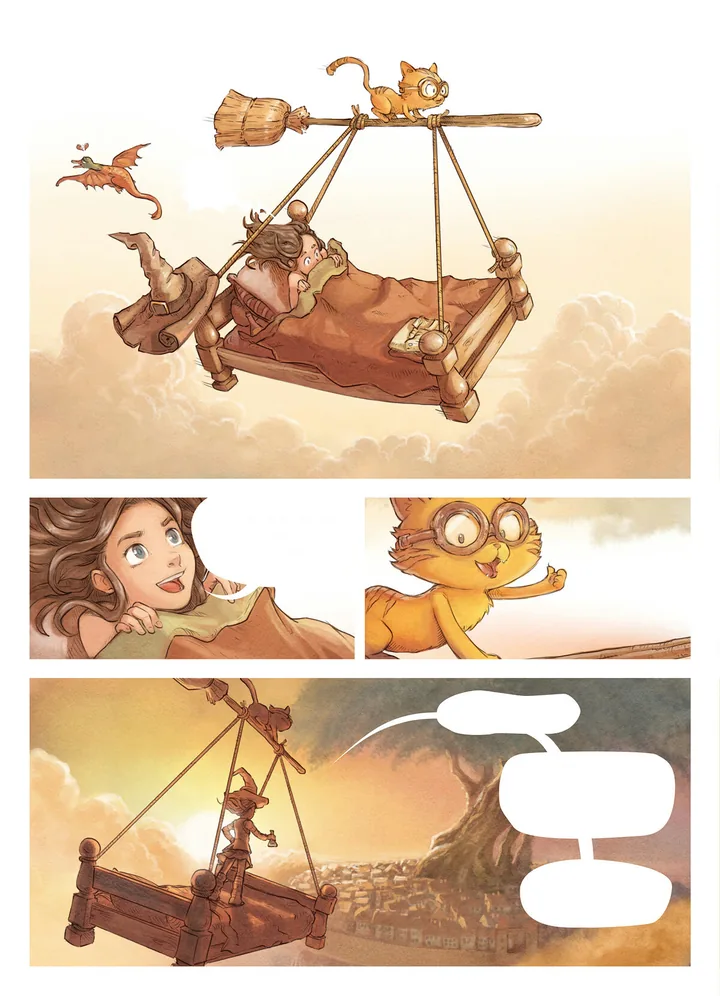
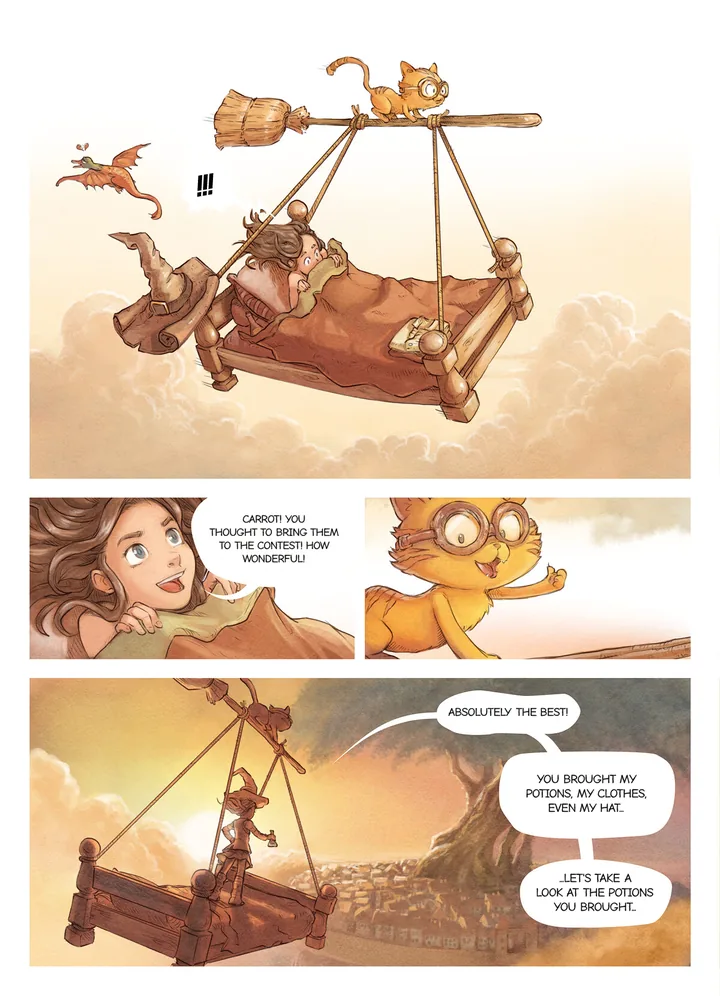
Pepper & Carrot by David Revoy, CC BY 4.0. Cleaned and lettered with tinypica.
Before you start
You need two things: the page with its original lettering painted out, and the translation as one line per balloon. If the page still has text on it, start with how to clean text off a manga page.
Pick a face for each kind of text
A reader tells a whisper from a shout by the shape of the letters before reading a word. Give each kind of text one face, and keep to it for the whole series.
| Kind of text | What works | Why |
|---|---|---|
| Dialogue | A rounded comic face, in capitals | Stays readable at the small sizes a balloon forces. |
| Thoughts | The same face, slanted | Reads as quieter without a new shape to learn. |
| Shouts | Heavy and condensed | Fills the balloon. Loud before it is read. |
| Sound effects | A display face, set large | It is part of the drawing, not of the script. |
| Captions and signs | Plain and squared | Says “this is not a voice”. |
| Narration | A calmer book face | Sets the storyteller apart from the cast. |
Which font for which balloon goes through each kind in turn.
Break lines to the balloon’s shape
A balloon is widest in the middle, so the lines should be too: short, long, short. Break between phrases, not inside them, and do not split a word with a hyphen to make it fit.
- Leave a margin all round. Text that touches the outline looks cramped at any size.
- Two to five lines read best. One long line, or a tall column of single words, is a sign the breaks are wrong.
- Keep a name or a number together on one line.
Keep one size per page
Set the dialogue on a page at one common size. If each balloon gets its own size, a reader hears the volume change with every panel. Shouts and sound effects are the exception: they may run larger.
Check the tight ones
A translation is often longer than the original. When a line does not fit, shorten the line before you shrink the type: a smaller size in one balloon is the first thing a reader notices.
In tinypica
Typesetting is the last of four steps. When a project goes all the way to Letter, each line is lettered into its balloon in a face matched to its kind, at one size per page. Change any line in the editor and letter the page again. That is free, as often as you like.
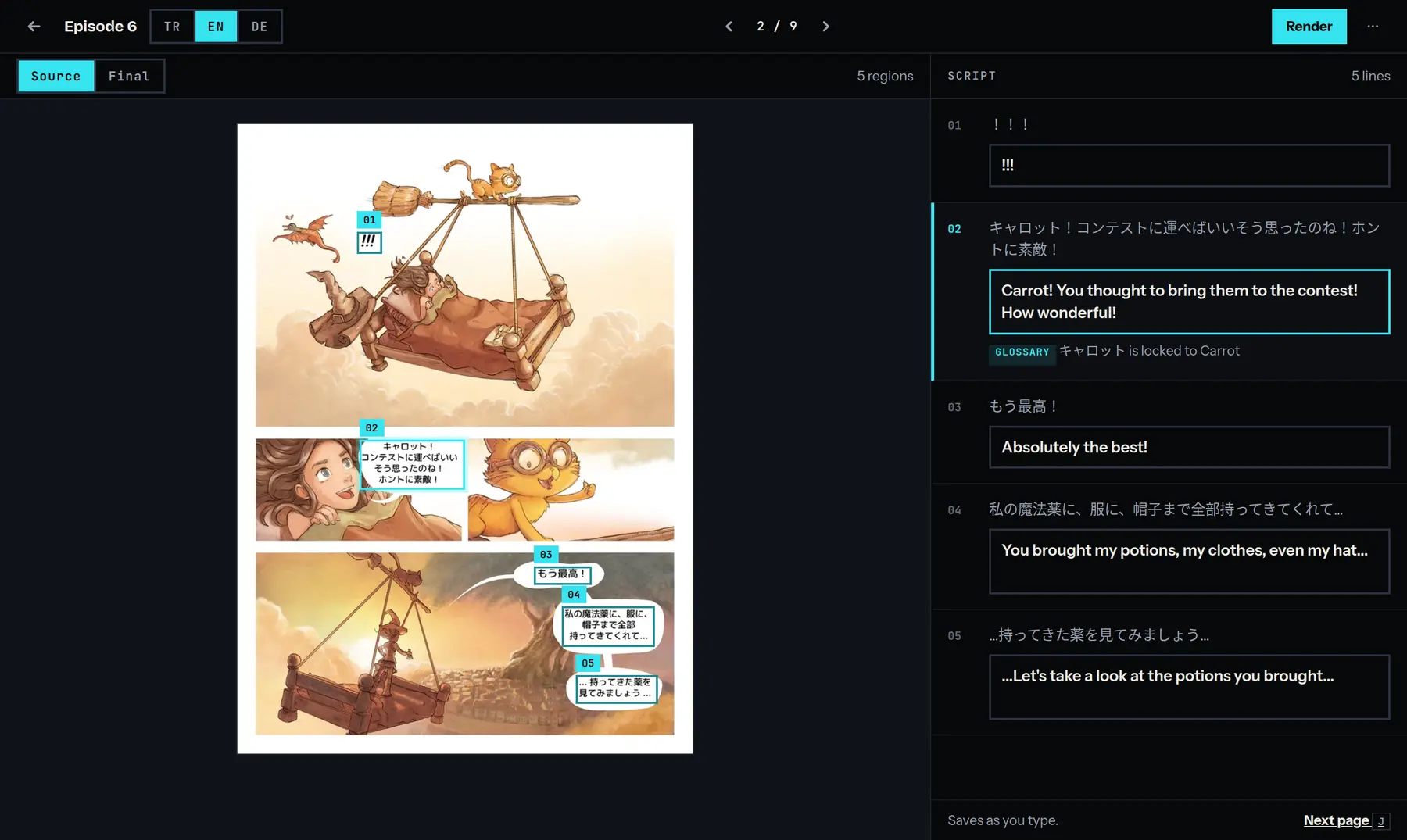
Chinese can be translated but has no lettering face yet, so a Chinese run stops at the clean page.
Common mistakes
- A different size in every balloon.
- Lines broken wherever the box ended, in the middle of a phrase.
- Sound effects set in the dialogue face.
- Text centred on the balloon’s bounding box instead of its drawn shape, tail included.